





































Top Concepts for Logistics Software Development in the Business World
Discover top logistics software development concepts transforming business operations with smarter automation, real-time tracking, and supply chain optimization.

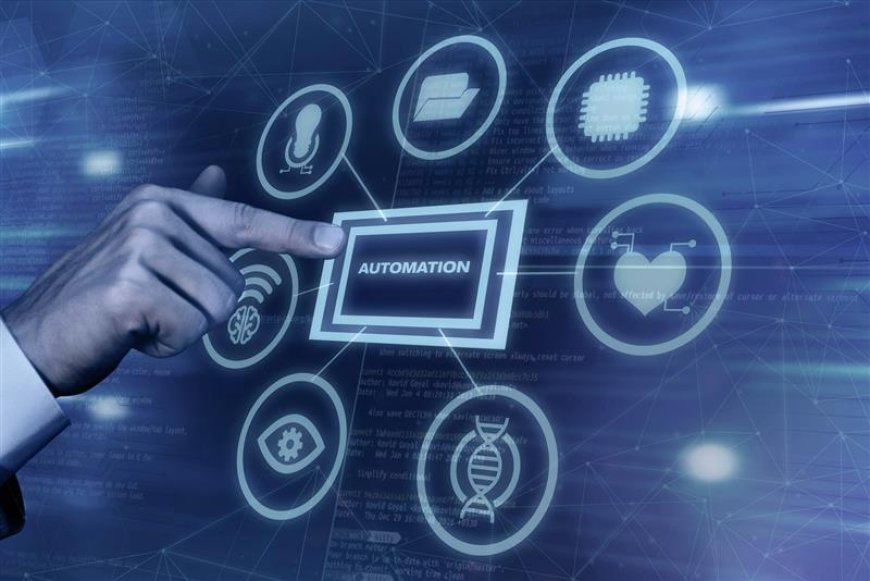
Would you like to improve your logistics operations by utilizing state-of-the-art software solutions? Or maybe you'd like to strengthen your distribution system. Read this blog to learn more about why your company needs logistics software and how to build it. Additionally, it will shed light on the top logistics software development concepts that will dominate the shipping and logistics business in the years to come. Here we go.
What is Logistics Software?
In order to fulfill the needs of consumers or businesses, logistics involves managing the movement of goods from their place of production to their final destination. Software that helps you manage your company's logistics and have a productive business is vital in light of the continual fluctuations in shipping and gasoline prices. This program will assist you in making sure that your company's workflow is efficient and productive.
You may use it to organize all of your created materials and get them where they need to go. Transportation, which is often the most expensive and complex to monitor, is the main emphasis of logistics software.
Development of logistics software is a program that aids companies in managing the many aspects of manufacturing, from arranging for the supply of raw materials to transporting finished goods to consumer outlets.
Logistics software: How can it benefit your company?
Logistics play a crucial role in relocating merchandise to locations where it may be sold for the most profit. Because it allows products to transit from suppliers to manufacturers, retailers, distributors, and finally to consumers, it is a crucial link in the supply chain.
Software should be your first choice for any management-related work, according to the IT consulting businesses. Any business may get these benefits by outsourcing the process to logistics management software:
Modernized Transport -
An essential part of logistics is transportation. Gas, electricity, labor, highway tolls, and shipping costs are highest for this. Logistics software is useful for automating processes and managing many forms of transportation. In order to maximize productivity and minimize expenses, logistics management software facilitates data analysis and the making of pertinent choices.
Streamlined Shipping -
Several problems impact delivery and cause delays in the logistics and supply chain business. Companies may speed up product delivery to clients by using logistics software. By making significant interventions in the manufacturing cycle and identifying an appropriate carrier, logistics management software may enhance delivery speed. As a result, shipping delays are significantly decreased.
Fewer Mistakes Made by People
Logistics management software also helps cut down on human mistake, which is a huge plus. Large amounts of transportation data are notoriously complex, time-consuming, and error-prone to analyze manually. With the help of logistics software, these data can be processed quickly and accurately, allowing operations to go smoothly and with little to no delay.
Programmatic Operations -
Integrating process automation into logistics software is a huge help. Logistics software allows for the automation and management of certain tasks, such as the creation of shipment routes, load planning, and the tendering of loads to carriers. In addition, it facilitates timely and effective handling of operations by doing away with paperwork.
Saved Money -
The most cost-effective shipping providers, delivery agents, and transportation methods may be automatically compared using logistics software. Logistics software also helps cut expenses by improving cargo planning and reducing the need for expedited shipments.
As e-commerce software has grown in popularity, so has the need for logistics software. Among the factors contributing to the surge in demand for logistics technology are the current global condition of rapid technological advancement and the COVID-19 pandemic.
Consequently, logistics is dynamic, changing throughout time to meet the demands of all sectors.
Some trends that will influence logistics and supply chain in 2023:
Robots for Warehouses -
Several forward-thinking logistic robotics firms have made great strides in incorporating AI and ML throughout the previous several decades. Machine learning technologies are being sought after by nearly every website development firm.
Software for managing warehouses or logistics is available with greater sensors and reaction capabilities. Recently, supply chain robots in warehouses has been moving at a breakneck rate.
For instance, JD received $500 million from Google for automated logistics, while Alibaba spent $15 billion on robotic logistics infrastructure. Additionally, by the end of 2021, the worldwide market for supply chain robotics warehouses is projected to reach $22.4 billion.
Intelligent Machines -
Logistic firms will employ AI to sift through data for trends and churn insights. Intelligent transportation, route optimization, demand forecasting, financial planning, and other related activities will benefit from this.
AI-driven logistics optimization, according to McKinsey, may save costs with the help of real-time predictions and behavioral coaching. When compared to other analytics methodologies, AI has the potential to provide greater incremental value to the logistics and transportation business, at 89%.
Hosting in the Cloud -
With cloud-integrated software, you may use cloud computing services like inventory tracking, real-time pricing changes, and more. In addition, it allows for complete process and system control in real time and with pinpoint precision.
With this technology, you can monitor your order or product at every stage, from placement of order to delivery, providing you with all the information you need in one convenient location.
Digital ledger technology -
One way to record transactions between parties safely and permanently is via blockchain, which is also called distributed ledger technology. By using blockchain technology to create decentralized and encrypted databases, supply chain participants may do away with middlemen who check records and coordinate transactions.
Analytics for the Future -
Predictive maintenance has grown rapidly in the logistics business, with the use of sensor technology and AI. Executives in the supply chain want to maximize data use for predictive maintenance, demand forecasting, inventory level adjustments, cold chain transportation, and supply chain integrity protection.
Logistics automation makes it easier for businesses to track all of their products and orders. By efficiently organizing its tasks, the organization gains an additional edge.
How Comprehensive is Logistics Software?
Supply chain logistics include the whole lifecycle of a product, from manufacture to movement of inventories to timely delivery to the end user.
Logistics software ensures the quality and safety of goods and services while streamlining critical activities like as manufacturing, planning, packaging, and shipping. Using logistics software allows for an automatic flow of incoming and outgoing traffic, which provides a comprehensive perspective of items.
Forecasts indicate that the worldwide logistics software market will expand from 2017 to 2023, with a CAGR of 8.31%. There is a market for logistics services worth more than $9 trillion worldwide. While most logistics expenses are concentrated in the Asia-Pacific area, the United States has more third-party logistics providers than any other country. Logistics will be a lucrative sector for the foreseeable future so long as online shopping remains popular and shipments keep increasing in volume.
In terms of current trends, expert IT services predict that this kind of software will continue to see massive growth in its user base. In order to keep all of the current software running well, updates are placed on it.
Choosing the correct software is the key to a better future, and every website development firm is committed to helping clients install and use software effectively. There are many different organizations out there, each offering a unique set of services.
Conclusion:
The logistics industry is undergoing a remarkable transformation driven by technological innovation and the growing demand for faster, smarter, and more reliable supply chain solutions. From AI-driven automation and predictive analytics to blockchain and cloud-based systems, logistics and transportation software development is becoming a strategic investment for businesses aiming to improve operational efficiency and reduce costs.
By adopting forward-thinking logistics software conceptssuch as warehouse robotics, intelligent routing, digital ledgers, and automated dispatchorganizations can gain a competitive edge, minimize errors, and enhance customer satisfaction. As global trade continues to evolve and e-commerce expands, companies that embrace these cutting-edge technologies will be best positioned to navigate the complexities of modern logistics and thrive in an increasingly connected world.