

































The Rise of Indian Medical Devices in Everyday Healthcare
Indian-made medical equipment is helping hospitals improve care and reduce costs. Learn how ECGs, lasers, EEGs, and more support clinical functions.
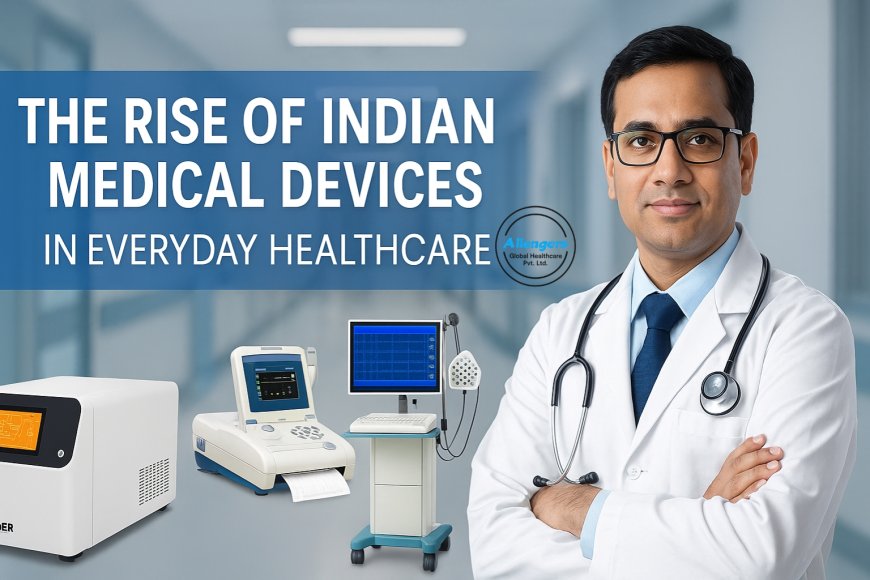
India is steadily becoming a self-sufficient force in the healthcare technology sector. As the demand for cost-effective diagnostics and treatments increases, hospitals are looking closer to home for solutions. A growing number of healthcare providers now rely on equipment built in India to carry out daily clinical functions from heart monitoring to surgical interventions.
While international brands were once the default choice, domestic manufacturers are now creating machines that meet day-to-day demands in hospitals across India. This change is bringing real value to the system making medical tools more affordable, support more available, and diagnostics more inclusive.
Whats Changing in Indian Healthcare Procurement
Until recently, hospital procurement teams often prioritized foreign-made machines. These products, while high in quality, came with import costs, long delivery timelines, and limited service support.
But over the past few years, Indian manufacturers have grown their capabilities significantly. They are producing machines that are compatible with hospital-grade networks, clinical software, and patient tracking systems. Their teams also provide assistance with training, repair, and upgrades something that many international brands struggled to offer in remote regions.
The overall result is better accessibility, improved planning for budget-conscious hospitals, and faster implementation of diagnostic services.
Commonly Used Machines Now Made in India
Heres a closer look at several types of medical equipment that are now designed and built in India and how they are used in different hospital departments.
ECG Machines
Used across general OPDs, emergency rooms, and ICUs, ECG machines have become a regular fixture in hospitals. Indian brands offer them in various configurations from basic single-channel devices to more detailed 12-lead digital models.
These machines often come with features like thermal printers, USB support, and easy report transfer, allowing hospitals to manage patient records with ease.
EEG Systems
Electroencephalography machines are vital in diagnosing brain-related conditions such as seizures, stroke complications, and sleep disorders. Indian EEG systems today offer reliable signal recording and software-supported analysis, making it easier for neurologists to detect abnormalities.
They are often paired with EMG tools for a broader understanding of nerve and muscle activity.
Holmium Lasers for Urology
Kidney stones and prostate issues are widespread across age groups. Indian-manufactured Holmium laser systems now help urologists treat these issues through less invasive techniques. These lasers come in several output levels 30W, 65Wand 100W and feature simple control interfaces for accurate performance.
Their affordability means even smaller hospitals can add them to their surgical suites.
TMT Machines
Treadmill testing equipment helps assess cardiac health under physical stress. Locally made TMT systems offer ECG integration, patient safety protocols, and real-time reporting. Their user-focused design ensures that cardiology teams can interpret data quickly during tests.
Many Indian machines are designed for compact spaces and come with remote monitoring features.
Polysomnography Equipment
Sleep labs use these machines to analyze patterns such as breathing, heart rate, and brain activity. In India, a rising number of manufacturers now offer PSG machines that meet lab and home-based requirements. These systems often include software for sleep scoring, making it easier for physicians to reach conclusions without manual data sorting.
How These Machines Are Making a Difference
Hospitals and diagnostic centers, particularly in smaller towns, benefit most from this shift toward local sourcing. Indian-manufactured machines help expand service offerings without causing financial strain. Staff also report faster learning curves due to simplified design and regional language options in user interfaces.
In addition, these tools help reduce patient wait times. Since hospitals can invest in more devices at once, patients no longer have to wait days for basic diagnostics like ECGs, EEGs, or treadmill tests.
Supporting India's Broader Healthcare Goals
The development and use of Indian medical equipment also align with national policies like Make in India and Atmanirbhar Bharat. These initiatives aim to strengthen the countrys manufacturing sector and reduce dependency on imports especially for essential health infrastructure.
When hospitals choose local manufacturers, they contribute to job creation, technology advancement, and the growth of an industry that has real potential to improve lives across the country.
About Leading Manufacturers: Spotlight on Allengers
Among the notable names in Indias medical equipment sector is Allengers Global Healthcare. The company offers a wide array of hospital-grade machines from heart monitors and urology lasers to patient beds and neurodiagnostic equipment.
Theyre known for balancing usability with precision. Hospitals working with Allengers get support for training, installation, and technical service. Plus, they have the convenience of exploring product options online:
? https://www.allengersglobal.com/all-products
Whether a hospital is looking to upgrade its cardiology lab or establish a sleep study unit, Allengers offers dependable systems that fit a variety of needs and budgets.
Export Potential and International Appeal
Indias manufacturing expertise is gaining recognition beyond its borders. Several Indian companies now export ECG, EEG, and laser systems to other countries in Asia, Africa, and the Middle East. These nations are drawn to the balance of affordability, simplicity, and functionality offered by Indian equipment.
As more hospitals globally face pressure to manage costs without compromising care quality, Indias role as a medical equipment provider is likely to expand.
Final Thoughts
Indias move toward domestically built medical equipment isnt just about policy or pricing its about practicality. Hospitals are choosing Indian machines because they solve real problems: downtime, service gaps, high maintenance costs, and installation delays.
Whether in a metro hospital or a rural community clinic, Indian equipment is helping staff work more efficiently and treat patients faster. For the healthcare sector, this is more than just convenience its a foundation for dependable, long-term progress.